Table of Content
[Hide]
What is Prototype Machining?
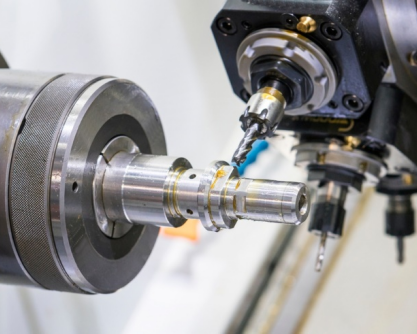
Prototype machining is a manufacturing process used to create samples or prototypes of a product. It typically uses computer-aided design (CAD) software and computer numerical control (CNC) machines to precisely cut and shape materials, creating models that resemble the final product. These prototypes can be used to test product design and performance, and to make necessary modifications and improvements. Prototype machining is widely used in industries such as rapid manufacturing, automotive, aerospace, medical devices, and consumer goods.
Why Choose Ripple MFG's Prototype Machining Services?
Accelerate Product Validation and Launch
As a professional prototype machining manufacturer, Ripple MFG's prototype machining services can quickly generate real parts, helping customers to validate design concepts through physical touch and testing before mass production. This method accelerates the product iteration process, allowing customers to confirm designs more quickly and speed up the launch process.
Reduce Tooling Costs
Traditional tooling manufacturing is expensive, but Ripple MFG's prototype machining services can produce parts that meet testing requirements without the need for complex tool development. This not only reduces dependence on expensive tools but also avoids the costs associated with tool modifications due to design changes, saving costs for customers.
Support for Diverse and Complex Designs
Prototype machining is particularly suitable for complex geometric shapes and small-batch production of parts, which may not be feasible with conventional precision injection molding techniques. Ripple MFG provides customized prototype machining services for various industries, including industrial, medical, automotive, electronics, and toys, meeting the needs for complex structures and high-precision parts in different fields.
More Flexible Design Adjustments
The rapid and low-cost nature of prototype machining allows customers to easily make design changes during the development process, which is crucial for the iteration and testing of innovative designs. By quickly obtaining adjusted parts, customers can more effectively optimize product performance and appearance before the product launch.
References
Related Prototyping Manufacturing Services News
- Medical Marvels: Innovations in Prototype Machining for Healthcare DevicesJanuary 5, 2024In today's rapidly advancing world, innovation in the healthcare sector has become essential for better patient outcomes. One area that has seen remarkable progress is prototype machining for heal...view
- Development History Of Injection MoldingFebruary 27, 2023Introduction to Injection Molding Injection molding is also known as injection molding, which is a kind of injection and molding method. The advantages of injection molding method are fast production ...view
- Urethane Casting for Custom Parts: Your Key to InnovationOctober 27, 2023Innovation is the lifeblood of progress in product development, and for those seeking to create custom parts with precision and flexibility, urethane casting services are emerging as a pivotal solutio...view
- What Is Pressure CastingFebruary 27, 2023Introduction to Pressure CastingPressure casting is a casting method in which molten or semi-molten metal is pressed into the metal casting mold at high speed and crystallized under pressure, referred...view
- Automotive Evolution: Enhancing Vehicle Design with Urethane Casting ServicesJanuary 5, 2024The world of automotive design has continuously evolved to meet the demands of consumers seeking high-performance vehicles. In recent years, urethane casting services have emerged as a vital tool for ...view
- Knowledge Of Sheet Metal WorkingFebruary 27, 2023Introduction to Sheet Metal ProcessingSheet metal processing is a pivotal technology that sheet metal technical staff needs to grasp, and it is also an important process for forming sheet metal produc...view